
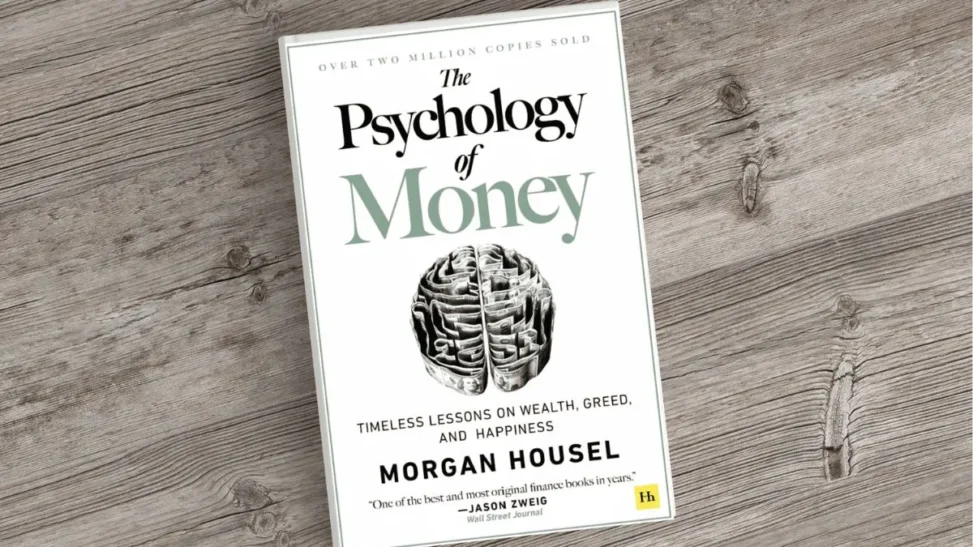
Money is often discussed in terms of numbers, formulas, and strategies. However, The Psychology of Money emphasizes that financial success is less about intelligence and more about behavior. Written by Morgan Housel, the book explores how emotions, habits, and personal experiences shape our financial decisions.
Rather than focusing purely on technical investing advice, the book highlights the importance of mindset. It explains that financial outcomes are deeply influenced by patience, humility, and long-term thinking. Below are the first five powerful lessons from the book, explained in depth in a practical and professional way.
1. Financial Success Is More About Behavior Than Intelligence
One of the most powerful lessons from The Psychology of Money is that doing well with money is not necessarily about being mathematically brilliant or academically gifted. Instead, it is about managing your behavior consistently over time.
Many people assume that mastering complex financial strategies guarantees success. However, the book explains that emotional discipline often matters more than technical knowledge. People with average financial knowledge but strong self-control can outperform those with advanced expertise but poor impulse management.
Behavior influences decisions such as saving regularly, avoiding unnecessary risks, and staying calm during economic uncertainty. These actions require emotional stability rather than high intelligence.
Financial markets fluctuate. Economic conditions change. In such environments, reacting emotionally can lead to poor decisions. Fear and overconfidence are common behavioral traps.
The book emphasizes that successful investors often win because they remain patient and rational when others panic or act impulsively.
Another key point is that behavior is personal. Two people with the same income and knowledge can achieve very different outcomes depending on their habits.
Consistency plays a vital role. Small, disciplined actions repeated over years create significant results.
Managing behavior also includes knowing your limits. Avoiding decisions you do not fully understand is often wiser than chasing trends.
Humility protects long-term success. Recognizing that uncertainty always exists prevents reckless overconfidence.
Ultimately, financial growth depends more on how you behave during stressful moments than on how much you know in theory.
Mastering money begins with mastering yourself.
2. Everyone Has a Unique Financial Perspective
Another important lesson is that everyone views money through the lens of their personal experiences. Your upbringing, environment, and life events shape how you think about spending, saving, and investing.
Someone who grew up during economic stability may approach risk differently than someone who experienced financial hardship early in life.
The book explains that what feels logical to one person may seem risky or unnecessary to another. These differences are not always about right or wrong. They are often about context.
Understanding this helps reduce judgment. Instead of assuming others are financially irresponsible, consider that their background influences their choices.
Your own financial decisions are also shaped by your experiences. Recognizing this can help you identify biases.
For example, someone who witnessed market downturns may prefer conservative strategies. Another person who experienced rapid economic growth may feel more comfortable taking risks.
The key lesson is self-awareness. Knowing why you think the way you do allows you to make more balanced decisions.
Financial advice is rarely one-size-fits-all. Personal context matters.
When you understand your financial perspective, you can design strategies that align with your comfort level and goals.
This awareness also improves communication within families and partnerships regarding money decisions.
Ultimately, financial behavior becomes more intentional when you understand the psychological factors behind it.
Money decisions are deeply personal, and respecting that complexity leads to better outcomes.
3. Compounding Works Best with Patience
Compounding is often described as one of the most powerful forces in finance. However, the book highlights that its true strength lies in time rather than complexity.
Compounding simply means that your returns begin generating their own returns. Over long periods, this effect can lead to significant growth.
The challenge is patience. Many people interrupt compounding by frequently changing strategies or reacting emotionally to short-term fluctuations.
The book shares examples of long-term investors who achieved remarkable success not because they made extraordinary decisions, but because they stayed consistent for decades.
Time allows small gains to accumulate. It reduces the need for dramatic actions.
Patience requires resisting the urge to chase quick results. Fast profits may appear attractive, but steady growth often proves more reliable.
Compounding also applies to habits. Regular saving, modest investing, and consistent reinvestment build momentum over years.
The key insight is that staying invested often matters more than finding perfect timing.
Interrupting compounding through frequent withdrawals or impulsive shifts can limit long-term growth.
Understanding this principle encourages long-term thinking.
When you allow time to work in your favor, discipline becomes more valuable than constant activity.
Compounding rewards those who are calm and consistent.
Patience transforms ordinary efforts into extraordinary outcomes.
4. Wealth Is What You Don’t See
One of the most thought-provoking lessons in The Psychology of Money is that wealth is often invisible. Many people associate wealth with visible signs such as expensive possessions or luxury lifestyles.
However, true wealth is not about what you display. It is about what you retain.
Savings, investments, and financial security are rarely visible to others. Yet these invisible assets provide freedom and stability.
The book explains that spending money to appear successful reduces actual wealth. Real financial strength lies in assets that generate long-term value.
Choosing not to spend can be more powerful than earning more.
Financial independence often results from consistent saving rather than high income alone.
Avoiding lifestyle inflation helps preserve wealth.
This lesson encourages shifting focus from appearance to security.
Building wealth quietly requires discipline and long-term thinking.
The goal is not external validation but internal stability.
Wealth provides options, flexibility, and peace of mind.
Understanding that wealth is what you do not see reshapes financial priorities.
It emphasizes substance over status.
True financial success is measured by security, not display.
5. Saving Is About Flexibility, Not Just Income
Saving money is often associated with preparing for emergencies. While this is important, the book highlights another powerful reason: flexibility.
Savings provide the ability to make choices without constant financial pressure.
Flexibility allows you to handle unexpected events calmly.
It also provides opportunities to pursue personal growth or career changes.
The amount you save is often more important than how much you earn.
High income does not guarantee security if spending matches earnings.
Savings create independence from short-term stress.
They reduce the need to make rushed decisions under pressure.
Financial flexibility increases confidence.
When you have reserves, you can think long term.
This mindset shifts focus from consumption to security.
Saving becomes a tool for empowerment.
It strengthens your ability to respond thoughtfully rather than react emotionally.
Ultimately, saving is not about restriction. It is about freedom.
It gives you control over your time and choices.
And that freedom is one of the most valuable assets money can provide.
6. Risk and Uncertainty Are Always Part of the Journey
One of the core messages in The Psychology of Money is that uncertainty is not an exception in finance — it is the rule. Markets rise and fall. Economies expand and contract. Unexpected global events can shift financial landscapes overnight.
Many people try to eliminate risk completely. However, the book explains that avoiding all risk often means missing valuable opportunities. Risk is the price paid for potential growth.
The key is understanding that uncertainty cannot be fully predicted. Even experts with years of experience cannot foresee every outcome. Accepting this reality builds emotional resilience.
When people expect certainty, they become frustrated or fearful during volatility. But when they understand that unpredictability is normal, they respond more calmly.
Risk management is not about eliminating uncertainty. It is about preparing for it. Diversification, long-term planning, and reasonable expectations help balance exposure.
The book emphasizes that financial growth often requires patience during uncertain periods. Short-term discomfort can lead to long-term rewards.
Instead of trying to predict every market move, focus on strategies that can withstand different scenarios.
Building an emergency fund is one practical way to reduce stress during uncertain times.
Accepting uncertainty also reduces overconfidence. Humility becomes a strength in financial planning.
Risk is not the enemy; unmanaged emotional reactions to risk are.
Understanding that uncertainty is permanent allows you to approach investing with realistic expectations.
And realistic expectations protect both financial health and peace of mind.
7. The Importance of a Long-Term Mindset
Short-term thinking often leads to emotional decisions. News cycles, market fluctuations, and temporary setbacks can influence behavior dramatically. However, The Psychology of Money highlights the value of focusing on the long term.
Long-term thinking shifts attention from daily noise to overall progress. It encourages patience and stability.
When you zoom out, short-term volatility often appears less dramatic. Over extended periods, consistent growth becomes clearer.
The book shows that those who maintain a long-term perspective are less likely to panic during downturns.
A long-term mindset also supports compounding. Time amplifies steady efforts.
This principle applies beyond investing. Career growth, business success, and personal development all benefit from sustained focus.
The challenge is resisting immediate emotional reactions. Headlines often emphasize urgency, but thoughtful investors prioritize perspective.
Long-term thinking requires confidence in your plan. This confidence grows through research and clear goal-setting.
It also involves accepting that not every year will produce strong returns. Variability is normal.
By focusing on decades rather than days, you reduce stress and improve consistency.
A long-term mindset transforms investing from speculation into strategy.
And strategy, supported by patience, increases the likelihood of sustainable success.
8. Room for Error Is Essential
Another critical lesson in the book is the importance of leaving room for error. Financial plans that depend on perfect outcomes are fragile.
Life is unpredictable. Unexpected expenses, career shifts, and economic downturns can disrupt even the best plans.
Building margins of safety protects against these uncertainties. This might include maintaining extra savings, avoiding excessive debt, or diversifying investments.
Room for error reduces stress because you are not operating at maximum risk.
The book emphasizes that successful investors often plan conservatively. They do not assume ideal returns every year.
Flexibility is more valuable than precision.
Having extra reserves allows you to stay calm during challenging periods.
When plans are too tight, small disruptions can cause significant setbacks.
By planning for less-than-perfect scenarios, you increase resilience.
This approach also prevents emotional decision-making under pressure.
Room for error creates psychological comfort.
It allows you to remain patient rather than reactive.
Financial strength is not just about maximizing gains. It is about surviving unexpected challenges.
And survival, over time, is what allows growth to continue.
9. Avoid Comparing Your Financial Journey to Others
Comparison is a natural human tendency. However, when applied to money, it can become harmful.
The book highlights that comparing your financial progress to others often leads to unnecessary pressure.
Everyone’s circumstances differ. Income levels, family responsibilities, opportunities, and risk tolerance vary widely.
What appears successful from the outside may not reflect underlying reality.
Comparison can encourage overspending in an attempt to match lifestyles.
It may also push individuals into riskier investments to achieve faster results.
True financial security is personal. It should align with your values and goals.
Instead of measuring success by others’ achievements, measure it by your own progress.
Focus on financial independence rather than public validation.
Building wealth quietly often produces better long-term results than chasing appearances.
Comparison distracts from your own strategy.
When you concentrate on consistent improvement, external noise becomes less influential.
Contentment supports disciplined behavior.
Avoiding comparison allows you to define success on your own terms.
And personal clarity strengthens financial confidence.
10. True Wealth Provides Freedom of Time
One of the most meaningful lessons from The Psychology of Money is that the ultimate goal of wealth is not luxury — it is control over your time.
Money can provide choices. It allows you to decide how to spend your days, which projects to pursue, and how to balance work and personal life.
Time is a limited resource. Financial stability creates flexibility in how you use it.
The book emphasizes that freedom is more valuable than status.
Accumulating wealth solely for display misses the deeper purpose.
Financial independence reduces stress and increases autonomy.
It allows you to focus on meaningful activities rather than constant financial pressure.
This perspective shifts priorities from consumption to security.
Building wealth becomes a tool for designing your ideal lifestyle.
When you view money as a means to control your time, your financial strategy becomes clearer.
You begin to value savings, long-term investing, and thoughtful spending.
Freedom of time enhances well-being and satisfaction.
It allows space for learning, relationships, and personal growth.
Ultimately, wealth is not about what you buy. It is about the life you can build.
And that life is shaped by how wisely you manage both money and time.
11. Reasonable Is Better Than Rational
One of the most practical insights from The Psychology of Money is that being reasonable is often more important than being perfectly rational. Traditional financial theory assumes that people act logically at all times. In reality, emotions influence nearly every financial decision.
Trying to behave in a purely rational manner may sound ideal, but it is not always sustainable. A financial plan that looks perfect on paper might fail if it does not align with your comfort level.
For example, an aggressive investment strategy may offer higher potential returns. However, if market fluctuations cause constant anxiety, you may abandon the plan during downturns. In such cases, a more moderate approach might lead to better long-term results.
Reasonable decisions consider both numbers and emotions. They account for human behavior.
Financial success often depends on sticking with a strategy during uncertain times. If a plan feels too stressful, consistency becomes difficult.
The book suggests choosing strategies you can maintain, even if they are not mathematically optimal.
Being reasonable means understanding your risk tolerance.
It means balancing ambition with peace of mind.
It also means recognizing that financial planning is personal.
Sustainable strategies outperform perfect strategies that cannot be maintained.
When your plan fits your personality, you are more likely to stay committed.
And long-term commitment is one of the strongest predictors of success.
12. Luck and Risk Play Larger Roles Than We Admit
Another profound lesson is acknowledging the roles of luck and risk in financial outcomes. Success stories often highlight hard work and intelligence, but external factors also contribute significantly.
Timing, economic conditions, and unexpected opportunities can influence results. At the same time, unforeseen challenges can disrupt even well-planned efforts.
Recognizing the influence of luck fosters humility. It prevents overconfidence and encourages thoughtful decision-making.
Similarly, understanding risk promotes empathy. Not every setback reflects poor judgment; sometimes circumstances are simply unfavorable.
This perspective reduces harsh self-criticism and judgment of others.
It also encourages diversification. Since outcomes are partly influenced by unpredictable factors, spreading risk becomes essential.
Accepting uncertainty helps manage expectations.
It reminds us that financial journeys are rarely linear.
Success often involves being in the right place at the right time, combined with preparation.
Acknowledging luck does not diminish effort. It enhances gratitude.
Understanding risk encourages cautious optimism.
This balanced perspective protects both confidence and humility.
13. The Seduction of Pessimism
The book explains that pessimistic narratives often feel more convincing than optimistic ones. Negative forecasts attract attention because they appear cautious and realistic.
However, long-term economic history shows steady progress despite periodic setbacks.
Constant exposure to alarming predictions can influence financial behavior negatively.
While caution is wise, excessive pessimism may lead to missed opportunities.
Balanced thinking involves recognizing short-term challenges while maintaining long-term confidence.
Markets experience downturns, but innovation and productivity continue over decades.
The key is distinguishing between temporary disruption and permanent decline.
Emotional reactions to alarming headlines often lead to impulsive decisions.
Remaining calm during uncertainty protects long-term investments.
Optimism does not mean ignoring risk. It means trusting in gradual progress.
History demonstrates resilience in economic systems.
Adopting a balanced perspective reduces anxiety.
And balanced thinking supports disciplined financial behavior.
14. Define “Enough” for Yourself
One of the most meaningful lessons in the book is understanding the concept of “enough.” Without a clear definition of what is sufficient, the pursuit of more can become endless.
Constant comparison and ambition can create dissatisfaction.
Defining your personal version of enough provides clarity.
It helps establish boundaries for risk-taking.
Financial decisions become aligned with personal values rather than external pressure.
Knowing what is enough reduces unnecessary stress.
It encourages gratitude for progress.
The book highlights examples of individuals who lost everything by chasing excessive gains.
Understanding limits protects long-term security.
Enough is not about settling; it is about aligning with purpose.
It means balancing ambition with contentment.
Clear boundaries prevent overextension.
Financial peace often comes from appreciating sufficiency.
When you know what is enough, decision-making becomes simpler and wiser.
15. You Cannot Predict, So Prepare
Financial forecasting is uncertain. Experts analyze trends, yet surprises continue to occur.
Instead of trying to predict every outcome, focus on preparation.
Preparation includes maintaining emergency funds, diversifying investments, and avoiding excessive leverage.
Flexibility is more valuable than precision.
Prepared individuals adapt more effectively to change.
The book emphasizes resilience over accuracy.
Financial plans should withstand multiple scenarios.
Preparation reduces panic during volatility.
It encourages long-term thinking.
Preparedness builds confidence.
It transforms uncertainty from a threat into a manageable factor.
When you prepare instead of predict, you reduce stress.
And reduced stress supports rational decision-making.
16. The Power of Simplicity
Complex strategies often appear impressive. However, simplicity frequently produces better long-term results.
Simple plans are easier to follow consistently.
Complicated systems increase the likelihood of mistakes.
The book advocates for clear, understandable strategies.
Simplicity enhances transparency.
It allows you to focus on fundamentals.
Overcomplicating investments can lead to confusion.
Simple approaches reduce emotional strain.
They are easier to explain and evaluate.
Consistency improves when systems are straightforward.
Clarity strengthens discipline.
Simplicity also supports long-term sustainability.
Financial success does not require constant complexity.
Often, steady and simple decisions outperform intricate ones.
17. Small Changes Compound Over Time
Just as money compounds, so do behaviors.
Small improvements in saving, spending, or investing accumulate significantly over decades.
Minor adjustments today can create substantial differences in the future.
This principle encourages patience.
It reduces pressure for dramatic action.
Consistency matters more than intensity.
Daily habits shape financial trajectories.
The compounding effect applies to skills and knowledge as well.
Continuous learning strengthens decision-making.
Incremental progress builds confidence.
Tiny improvements may feel insignificant initially.
But over time, they generate meaningful results.
Discipline in small areas creates major advantages.
And steady growth becomes sustainable success.
18. Financial Independence Is Psychological
True financial independence is not only about numbers. It is about peace of mind.
When money reduces stress rather than increases it, independence grows.
Security allows thoughtful decision-making.
It reduces fear-driven behavior.
Psychological comfort enhances well-being.
Financial independence creates space for meaningful pursuits.
It increases confidence in navigating uncertainty.
Money becomes a tool rather than a source of anxiety.
Mental clarity improves when financial foundations are strong.
Independence supports autonomy.
It strengthens resilience during challenges.
The goal is stability, not extravagance.
When financial life feels secure, overall life satisfaction improves.
19. Tailor Strategies to Your Personality
Financial plans must align with personal temperament.
Some individuals tolerate volatility easily; others prefer stability.
Ignoring personality leads to inconsistent behavior.
Strategies should match emotional comfort.
Personalization increases sustainability.
When plans reflect your values, discipline becomes easier.
There is no universal formula for success.
Understanding your habits and preferences enhances effectiveness.
Self-awareness prevents impulsive changes.
It supports consistent commitment.
Financial growth depends on alignment.
Alignment strengthens confidence.
And confidence sustains long-term success.
20. Long-Term Consistency Beats Short-Term Brilliance
The final lesson emphasizes that steady consistency often outperforms dramatic, short-lived success.
One excellent year cannot replace decades of disciplined behavior.
Sustained effort builds resilience.
Consistency protects against emotional swings.
It reinforces trust in your plan.
The book highlights that wealth grows quietly over time.
Brilliance attracts attention, but consistency builds security.
Patience, discipline, and humility form the foundation.
Small, repeated actions produce powerful results.
Avoid chasing quick wins.
Focus on steady progress.
Long-term thinking transforms ordinary habits into extraordinary outcomes.
Consistency is the true advantage.
And over time, it becomes unstoppable.
Strong Conclusion
The Psychology of Money teaches that financial success is less about spreadsheets and more about mindset. Numbers matter, but behavior matters more. Patience, humility, flexibility, and emotional control determine outcomes over decades.
The twenty lessons explored across this article reveal a consistent theme: money is deeply personal. It reflects our experiences, beliefs, fears, and aspirations. Understanding the psychological side of finance empowers better decision-making.
We learn that wealth is often invisible, that compounding rewards patience, and that defining “enough” protects long-term happiness. We understand the importance of preparation over prediction, simplicity over complexity, and consistency over brilliance.
True financial success provides freedom — especially freedom of time and peace of mind. It allows thoughtful living rather than reactive decision-making.
Ultimately, the book reminds us that managing money well begins with managing behavior. When we cultivate self-awareness, long-term thinking, and balanced expectations, financial growth becomes sustainable.
The journey toward financial stability is not about chasing perfection. It is about steady progress, thoughtful planning, and disciplined consistency.
And in that steady consistency lies the true psychology of money.
