
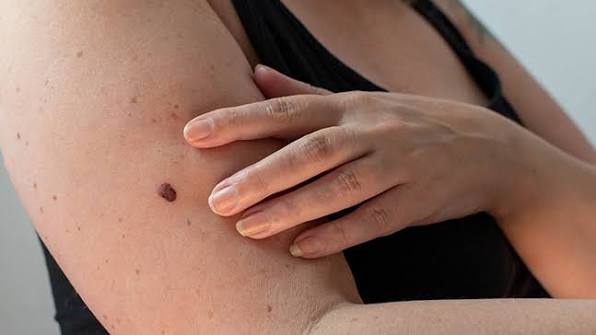
Moles are among the most common marks found on human skin. Some people have only a few, while others may have dozens scattered across different parts of the body. They can appear on the face, neck, arms, legs, back, scalp, hands, feet, and other areas.
Because moles can occur in so many different places, it is understandable that people sometimes wonder whether the location of a mole has a special meaning. Some traditional beliefs associate particular mole locations with personality traits, luck, relationships, or other characteristics.
From a medical perspective, however, the location of a mole does not reveal a person’s personality or predict their future. What matters much more is what the mole looks like and whether it changes over time.
Most common moles are harmless. However, some unusual or changing pigmented spots can be signs of melanoma, a serious type of skin cancer. Learning how to recognize concerning changes can help you know when a mole should be examined by a dermatologist.
What Exactly Is a Mole?
A mole, medically called a nevus, is a growth that develops when pigment-producing cells called melanocytes grow together in a cluster.
Common moles are often pink, tan, brown, or another relatively uniform color. They may be flat or slightly raised and are frequently round or oval with a distinct border.
Most adults have multiple common moles, and new ones can appear during childhood and adulthood. Many people continue developing common moles until around age 40.
Having a mole does not automatically mean there is a health problem.
In fact, most ordinary moles are benign. The more useful question is whether a particular mole looks unusual compared with your other moles or whether it has recently changed.
1. Moles on the Face
Moles on the face are extremely common. They may appear on the cheeks, forehead, chin, around the nose, or other areas.
Because the face receives regular sun exposure, it is useful to pay attention to changes in any pigmented spot located there.
A facial mole that has remained stable for years and looks similar to your other moles is generally less concerning than a new or changing spot.
However, a mole that becomes asymmetrical, develops an irregular border, changes color, grows, or otherwise looks different should be evaluated by a dermatologist.
Sun protection is also important for the face. Wearing sunscreen, seeking shade, and using protective clothing can help reduce exposure to ultraviolet radiation.
2. Moles on the Neck
The neck is another common location for moles.
A mole on the neck does not have a special medical meaning simply because it is located there. What matters is its appearance and behavior.
Neck moles can also become irritated by collars, necklaces, shaving, or other forms of friction. Irritation does not automatically mean cancer, but a mole that repeatedly bleeds, changes, or becomes persistently uncomfortable should be checked.
If a mole is frequently caught on clothing or jewelry, a dermatologist can also discuss whether removal is appropriate for practical reasons.
3. Moles on the Arms and Hands
Moles can appear on the arms and hands, including areas that receive significant sun exposure.
When checking these areas, don’t focus only on whether the mole is dark. Melanoma can have different colors and appearances, and some concerning lesions may be relatively small.
Look for changes in shape, border, color, size, or overall appearance.
It is also useful to examine the backs of the hands, fingers, and spaces between the fingers rather than only looking at the most visible parts of the arms.
4. Moles on the Legs
Moles on the legs are common and can remain completely harmless.
However, the legs are another area worth including when performing a regular skin self-examination.
In women, melanoma can occur relatively commonly on the extremities, while in men it more often occurs on the trunk or head and neck. This does not mean that a mole on the leg is automatically dangerous; it simply reinforces why the entire skin surface should be checked.
Pay attention to any spot that looks different from the others or has started changing.
5. Moles on the Back
The back can be a particularly difficult area to monitor because you cannot easily see all of the skin yourself.
Moles on the back are not inherently more dangerous simply because of their location, but regular examination is important.
Ask a partner or family member to help check difficult-to-see areas, or use mirrors or photographs when appropriate.
The American Academy of Dermatology recommends examining the entire skin surface, including areas such as the back, scalp, palms, soles, and between the toes.
If someone has many moles, keeping track of their appearance can make it easier to notice a new or changing spot.
6. Moles on the Scalp
Moles can develop on the scalp, although they may be difficult to notice because they are hidden by hair.
This is one reason a skin examination should not stop at areas that are easy to see.
When checking the scalp, part the hair in different areas and look for new or changing spots. Someone else can help inspect areas that are difficult to see.
A mole on the scalp is not automatically dangerous. The same general warning signs apply: changes in size, shape, color, border, or overall appearance deserve attention.
7. Moles on the Feet, Palms, or Under the Nails
Some people are surprised to learn that moles and other pigmented spots can occur on the palms, soles, between the toes, and under the nails.
These areas deserve attention during skin checks because melanoma can develop in places that receive little or no direct sunlight. The American Academy of Dermatology specifically recommends checking areas such as the palms, soles, between the toes, and around or beneath the nails.
A dark line or changing pigmented area beneath a fingernail or toenail should not automatically be assumed to be a harmless mole.
If a new or changing mark appears in these areas, especially if it looks different from your other spots, it is worth discussing with a dermatologist.
Does Mole Location Predict Your Personality?
There are many traditional systems that assign meanings to moles based on where they appear on the body.
For example, some cultural traditions associate facial moles or body moles with personality traits, relationships, wealth, or luck.
These interpretations can be interesting as cultural traditions, but they should not be confused with medical science.
There is no established medical evidence that having a mole in a particular location determines whether someone is confident, successful, fortunate, emotional, or likely to experience a particular life event.
If you’re interested in these traditions, they can be viewed as folklore or cultural symbolism rather than medical information.
What Matters More Than Location?
The most important thing to watch is whether a mole is changing.
Dermatologists commonly use the ABCDE rule to help identify features that may require further evaluation.
A — Asymmetry
Imagine dividing the mole into two halves.
If one half looks significantly different from the other, the mole may be considered asymmetrical.
Many ordinary moles are relatively symmetrical, while asymmetry can be one warning sign of melanoma.
B — Border
Look at the edge of the mole.
A concerning mole may have an irregular, scalloped, jagged, or poorly defined border rather than a smooth, clearly defined edge.
An irregular border does not prove that a mole is cancerous, but it is a reason to have the spot evaluated.
C — Color
Pay attention to the color of the mole.
A typical mole may have a relatively even color. A suspicious lesion may contain several different shades, such as brown, black, tan, red, white, or blue.
Color changes over time are particularly important.
D — Diameter
Melanomas are often larger than 6 millimeters when diagnosed, roughly the size of a pencil eraser.
However, size alone cannot determine whether a mole is dangerous. Some melanomas can be smaller than 6 millimeters.
Therefore, a small mole should not automatically be considered safe if it is changing or looks unusual.
E — Evolving
The final letter may be the most important one to remember.
“Evolving” means the spot is changing.
It may become larger, darker, differently shaped, raised, itchy, painful, scaly, or otherwise different from how it looked previously.
A changing mole should be evaluated, even if it does not have all of the other ABCDE features.
A Mole That Looks Different From the Others
Another useful concept is sometimes called the “ugly duckling” sign.
Instead of comparing a mole to a checklist alone, compare it with your other moles.
If most of your moles look similar but one looks noticeably different, that difference deserves attention.
The American Academy of Dermatology advises seeing a dermatologist for a spot that looks different from the others or changes, itches, bleeds, or becomes painful.
This can be particularly helpful for people who have many moles.
When a Mole Starts Itching
An itchy mole does not automatically mean melanoma.
Moles can become irritated for many reasons, including friction from clothing or accidental scratching.
However, persistent itching or a combination of itching with other changes should not be ignored.
If a mole begins changing while also becoming itchy, painful, scaly, or irritated, a dermatologist can determine whether further evaluation is necessary.
When a Mole Bleeds
A mole can sometimes bleed because it has been scratched, shaved, or caught on clothing.
That does not automatically mean cancer.
However, unexplained bleeding, oozing, ulceration, or repeated bleeding from a mole should be evaluated by a healthcare professional.
Melanoma can sometimes cause a mole or pigmented lesion to become damaged, bleed, or develop an abnormal surface.
A New Mole Can Also Deserve Attention
People often focus only on existing moles.
However, melanoma can also appear as a new pigmented spot.
A new mole or skin lesion that looks different from the person’s other spots should be examined, particularly if it changes over time.
The American Academy of Dermatology recommends paying attention to new spots as well as existing moles that change.
Why Regular Skin Checks Are Useful
Checking your skin regularly can help you become familiar with your normal pattern of moles and other marks.
This makes it easier to notice changes.
A basic skin check can include the face, neck, chest, abdomen, arms, hands, legs, feet, back, scalp, and areas around the nails.
People who have many moles, atypical moles, a personal history of skin cancer, or other risk factors may need more individualized monitoring. A dermatologist can recommend an appropriate schedule.
Protecting Your Skin From Excessive Sun Exposure
Skin protection is another important part of skin health.
Ultraviolet radiation from the sun can damage skin and contributes to skin cancer risk.
Simple protective habits include seeking shade, wearing protective clothing, and using broad-spectrum sunscreen as appropriate.
Avoiding indoor tanning is also important because tanning beds expose the skin to ultraviolet radiation.
Skin protection does not mean you need to avoid being outdoors. It means taking reasonable steps to reduce unnecessary ultraviolet exposure.
Don’t Remove a Mole at Home
If you dislike the appearance of a mole, it can be tempting to search online for home-removal methods.
Avoid cutting, burning, scraping, or applying unproven chemicals to a mole yourself.
Trying to remove a mole at home can cause infection, scarring, bleeding, and other complications. More importantly, removing a suspicious lesion without proper medical evaluation can interfere with diagnosis.
A dermatologist can examine the mole and determine whether removal is appropriate.
What Happens During a Dermatologist Visit?
If a dermatologist is concerned about a mole, they may examine it closely using specialized equipment.
Depending on what they see, the dermatologist may recommend monitoring the spot or removing it for laboratory examination.
The only way to definitively diagnose melanoma is to examine tissue for cancer cells.
This is why appearance alone should not be used to diagnose skin cancer.
Most Moles Are Not Cancer
It is important not to become frightened every time you notice a mole.
Common moles are extremely common, and most do not become melanoma.
According to the National Cancer Institute, only rarely does a common mole turn into melanoma. However, having many moles or certain types of atypical moles can be associated with increased melanoma risk.
The goal of checking your skin is not to assume that every unusual spot is cancer. It is to identify changes that deserve professional attention.
The Bottom Line
A mole’s location on the body does not have a proven medical meaning related to personality, luck, or future events.
Moles can appear almost anywhere on the skin, including the face, neck, arms, legs, back, scalp, palms, soles, and around the nails. What matters medically is not simply where the mole is located, but how it looks and whether it changes.
Remember the ABCDE warning signs: Asymmetry, Border irregularity, Color variation, Diameter, and Evolving changes.
A mole that becomes noticeably different from your other moles, changes in size or color, develops an irregular border, repeatedly itches, becomes painful, bleeds, or otherwise changes should be evaluated by a dermatologist.
Regularly checking your skin and protecting it from excessive ultraviolet exposure can help you stay aware of changes. If you are unsure about a particular mole, professional evaluation is a much better approach than relying on online mole-meaning charts or attempting to remove it yourself.
Knowing what is normal for your own skin can make it easier to recognize when something has changed—and that is much more useful than trying to determine what a mole supposedly says about your personality or future.